Starter guide
How to Read an EOB Without Panicking
July 14, 20265 min read
Starter guide
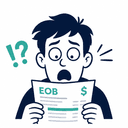
If you just opened an Explanation of Benefits and felt your stomach drop, you are not alone. EOBs are full of insurance words, columns, and amounts that can look like a bill even when they are not one.
This guide walks through the parts worth checking first.
An Explanation of Benefits is a notice from your insurance company about how a claim was processed. It usually shows the provider, service date, amount billed, plan allowed amount, insurer payment, and a possible patient responsibility.
It is a processing summary. It is not always a request for payment.
A provider bill comes from the doctor, hospital, lab, or facility. An EOB comes from the insurer. The EOB can help you understand what the provider may bill later, but you generally want to compare both documents before paying an unexpected balance.
If the provider bill is higher than the EOB's patient responsibility amount, that is worth asking about. It may mean a payment or adjustment has not posted, or it may mean something else in the claim needs review.
Start with these fields:
You do not need to understand every code before taking the next step. Start with the numbers that changed the balance.
Insurance paying $0 does not automatically mean something went wrong. Common reasons include:
The key is to look for the explanation line or reason code near the $0 payment. That language often tells you what to ask next.
Patient responsibility usually means the amount the insurer believes may be left for you after plan rules are applied. It can include deductible, copay, coinsurance, non-covered amounts, or denied charges.
That amount should usually be checked against the provider bill. If the numbers do not match, ask whether the insurer payment and adjustment have been posted.
Compare the EOB and provider bill when:
Keep both documents open when you call. Ask for the claim number, itemized bill, and any reason or remark code tied to the balance.
Usually, an EOB itself is not the bill. Compare it with the provider bill before paying an unexpected amount.
Look for the reason line. It may be deductible, denial, network status, missing information, or another plan rule. If it is unclear, ask the insurer to explain the exact reason code.
Ask the provider whether the insurance payment and adjustment have posted. Then ask the insurer whether the patient responsibility amount changed after the EOB was issued.
If you have an EOB, provider bill, or denial letter in front of you, paste it into Oh my EOB!. The tool can summarize the document, pull out the amounts that matter, and help you prepare questions for your insurer or provider.
This is informational only and not medical, legal, or insurance advice.
Paste your bill, EOB, or denial letter into Oh my EOB! for a plain English explanation and next-step checklist.
Try the free explainer